Wednesday, March 16, 2011

I LOVE Containers

Containing your stuff really is an important step in getting organized. Think of a bookshelf with various things scattered and stuffed on the shelves. Or visualize clean bookshelves with fun colorful boxes or natural baskets holding their contents to minimize the visual clutter. Oh - that is better.
Keeping smaller objects in containers can instantly give a space a more organized feeling. And by keeping like items together you will save time when looking for things. For example, I have shelving in my office that I use to hold supplies, books and other resource materials. In one container I have all my computer supplies such as extra cords, straps to tie cables together, and some user manuals. In another container I have new file folders and another container holds office supplies like ink cartridges, tape for my label maker, and a paper cutter. Since I order business cards a thousand at a time, I keep my back up supply in a small container. Seeing these beautiful grass cloth covered containers sure beats looking at piles of office supplies. It gives my office an orderly cohesive look.
I recently used this system with a client who had no storage in her desk. No drawers. No shelves. Just a modern open desk. Because she had no other place to put all her officey stuff she piled it on her desk top and on the floor around the desk. This looked messy and wasn’t conducive to her finding things quickly. So she found some inexpensive decorative boxes with lids that can hold the supplies and stack neatly near her desk. Of course we labeled each box so that she could find things instantly.
Check out these sites for a great selection of containers:


Give this a try in your office, closet, or playroom and let me know how it works for you.


Tuesday, February 22, 2011

How can a Professional Organizer help you? Here's what I did for one of my clients

I have been so fortunate to have Kim Rocke of New Leaf straighten me out!  My office/craft room had become the catch-all for all the household clutter – if it didn’t have any other place to live, it came to my space.  And took over!  I dreaded walking into that room, seeing piles and boxes filled with “stuff.” I felt I didn’t have my own space anymore and my creative spark was smothered by the mess.
I consider myself a relatively organized person but I was overwhelmed by how much I thought I needed to tackle to get it under control. Kim and I met and discussed my distressing situation, I outlined my goals and desires for the room, Kim offered a plan of action and we went right to work.  Kim made it so simple and clear to get started, move forward and maintain the action plan.  Her ‘system’ was easily tailored to my needs and within 2 hours I had my desk workspace back!  By the end of our 4-hour session, I had a distinct and achievable vision of what the office would look like and a follow-up plan to get there.  And, most magically of all, Kim whisked away all the trash and donation items, to keep them from becoming yet another pile in another part of the house.
My space is my own again.  My creative spark is rekindled and I can attack any project with a renewed energy.  In fact, I’ve been going through my house, pinpointing all those trouble zones (like junk drawers) and addressing them, using Kim’s ideas.  Every area I clear out, the lighter I feel.  It’s a fabulous feeling.
So fabulous I wanted to share it with a dear friend who had a milestone birthday coming up. Her close friends wanted an unusual and different gift for this birthday and I suggested a gift of Kim’s organizational services.  Our friend was quite stressed out by the state of her guest room/home office/craft room. A professional organizer is something our friend would never indulge in herself, so we all pitched in and our friend now has six hours of Kim’s practical, effective and stress relieving services.  Our friend declared it “the best gift ever!”  I am so looking forward to hearing about their progress!
Kathi Dirkse

Wednesday, February 16, 2011

Organization Can Make Preparing Your Taxes Easier

This past year I decided to hire a bookkeeper and can I say what a smart decision that was! I hired Teresa Middleton of Middleton Bookkeeping.


I met Teresa a couple of years in a Heartlink Networking Group and she is such a good fit for me and my business.

I keep all my receipts in labeled folders for each category, such as networking memberships and dues, marketing and website work, supplies, resource materials like books and magazines. I send Teresa an email with my expenses listed and my banking statements she enters it all into Quickbooks. She can do this so much more quickly than I could, so her fee is very reasonable. Plus at the end of the year she gives me a simple profit and loss statement that I hand over to my Tax Preparer.

By having Teresa take care of my bookkeeping and by keeping my receipts organized through out the year, I literally gathered all my tax papers together in less than half an hour. Organization really can save you Time!!

Wednesday, January 19, 2011

The 2011 Los Angeles Organizing Awards

Next Saturday, January 29 is the Los Angeles Organizing Awards. As a Board Member of the National Association of Professional Organizers Los Angeles Chapter, I have been very busy getting the word out about the Awards with posting details about the event on the NAPO-LA website and sending out emails to our members.

Soon our hard work will pay off with a Gala Industry Exchange Event and then the Awards Show and Dinner. Seeing so many in the industry is such fun and I look forward to meeting more of my fellow colleagues from across the world.

Here's me with the Great Organizing Guru himself, Peter Walsh at last year's Organizing Awards.

If you are interested in attending the Biggest Event in Organizing, click her to go to the NAPO-LA website

Tuesday, December 14, 2010

Take Breaks

From the Dec. Issue of O, the Oprah Magazine - An End to Overload - Four Ways to Break Your Multitasking Habit
by Lauren Dzubow

Humans work in cycles; we can concentrate for a period of time but then need time to rest. Every hour or so, take a quick walk around the block, or just step away from your desk for a few minutes.

Thursday, December 9, 2010

Embrace Discomfort

From the Dec. Issue of O, the Oprah Magazine - An End to Overload - Four Ways to Break Your Multitasking Habit
by Lauren Dzubow

People often give up on difficult tasks in order to escape to something easier. "Any project that takes mental effort, or involves critical thinking and creativity, is going to be a little painful sometimes," says Maggie Jackson, author of "Distracted". When you hit a wall, don't just point-and-click--push past it.

Monday, December 6, 2010

Organizational Expert, Julie Morgenstern, is on The Nate Berkus show


Julie Morgenstern really is the pioneer that made the world aware of Professional Organizing. I'll be watching today's episode of The Nate Berkus Show to see how she turns a basement into a functioning office for two brothers.

Build Up Your focus

From the Dec. Issue of O, the Oprah Magazine - An End to Overload - Four Ways to Break Your Multitasking Habit
by Lauren Dzubow

Chronic multitaskers may have weakened their ability to focus, says Christine Hohlbaum, author of "The Power of Slow". Set aside a block of time - even if it's just five minutes - to deal with a mentally challenging task; once you accomplish that, extend the time further

Thursday, December 2, 2010

Simplify Your Environment

From the Dec. Issue of O, the Oprah Magazine - An End to Overload - Four Ways to Break Your Multitasking Habit
by Lauren Dzubow


Simplify Your Environment

Humans are biologically programmed to pay attention to new stimuli, says Maggie Jackson, author of "Distracted" At your computer, close superfluous windows, turn off Twitter, and disable automatic email notification. Put unnecessary papers out of sight, and turn off your cell phone's ringer.

Thursday, November 18, 2010

Are You Multi-tasking Too Much?

Have you ever felt exhausted at the end of a day but also felt that you haven't accomplished a thing? Do you spend much of your day reading emails? I want to dispel a big myth: Multi-tasking is NOT the best way accomplish and complete your tasks. Oh but wait, we've worked so hard at multi-tasking. Women excel at multi-tasking. I love to feel extremely busy; it makes me look good in front of my boss.

Are you interested in working more efficiently?

1. Multi-tasking leads to mistakes and miscommunication. Wile talking on the phone, do you find yourself reading emails? Do you really think you retained both forms of communication? Did you catch all the details? I'm sure you didn't. While on the phone, pay attention to the other person on the line. That sounds like common sense and politeness, but I know too many of us are not doing this on a regular basis.

2. Use your calendar to block out your day in small bits or larger chunks of time. Don't just make a to-do list, but schedule time to do each thing on it. Julie Morgenstern in her book "Time Management from the Inside Out", states the bottom line: "A to-do not connected to a when rarely gets done." Be truthful with yourself on how long you'll need to complete a project and give it that full time. If it's a big project, then break it up into multiple segments throughout the day or week. If you find your attention wondering then work in smaller bits of time. Creative projects need longer portions of your day. And if you have the type of job where you must answer the phone as soon as it rings, then you will need to block out your time with bigger gaps, because you will take longer to complete tasks.

3. Use the morning or your most energetic time to get the most important things done. Big projects, writing, creative projects, anything that needs your undivided attention do first thing. Because if you are pre-occupied with a major project and worrying over it, you can't really focus on anything else.

4. Now for the really big challenge: Don't read your emails throughout the day as they pop into your inbox! Emails have become junk food or even heroin to many of us. They are addicting and make us feel super busy and important. But I really want to strongly suggest that you schedule specific times to read your emails maybe every other hour, and especially not while you are working on something else. For example, while I've been writing this article, I have received 5 emails, but I have not clicked onto my inbox. Not even just to see who they are from.  I know that if I go to my mailbox it will take longer to regain my focus and get back in the blogging zone. By scheduling time to focus on emails I'll  have enough time to read, respond or mark for follow up, and delete or file. I think this is where many of you get in trouble with emails: You read the email in a hurry and leave it in their inbox to deal with later. But then fifty or a hundred more emails come on top of that one and all is forgotten. Maybe you'll remember something about it but think it's been taken care of. Scheduling sufficient time and focusing solely on one task at at time while minimizing interruptions is essential to working efficiently and getting your to-do list DONE!!

5. So this brings me to my biggest suggestion FOCUS! Focus on one thing at a time. Do it. Complete it. Wrap it up and put it away. File the paper work. And check it off your list. Don't move on to the next thing until you have completely finished the one you are working on. This is how so many of you have piles of paperwork on your desk. You didn't really finish the one thing before moving onto another.

So start by making a list of tasks and projects. Guestimate the time it will take you to complete. Break large projects into smaller bite-size projects. Now block out time throughout your day for each task. Be sure to schedule time for phone calls and emails. The more things you schedule - the more you will get DONE!!


Thursday, November 4, 2010

Controlling Paper


By now you may have realized that I am a big advocate for saving as little paper as possible. I think the shredder should be your BFF (that’s Best Friend Forever).


So I’m going to give you some suggestions for limiting the amount of paper that comes into your home:

To stop all the unwanted catalogs go to this website http://www.catalogchoice.org/
It’s so easy, even you can do it!
Next, to stop all those credit card applications go to https://www.optoutprescreen.com/opt_form.cgi
To opt out of ads or informational mailers go to https://www.dmachoice.org/dma/member/regist.action
And while were on the subject of stopping unwanted interruptions, there’s also a National Do Not Call Registry at https://www.donotcall.gov/
This allows you to opt out of telemarketers calls

Now that we have limited the amount of paper coming into your home, let’s set up some procedures for controlling the remaining paper:
1. Designate a specific place for bringing the mail into your home as well as other papers from work, school, and such.
2. Use letter trays, wall pockets, baskets, mail sorters, any type of container to sort the papers immediately upon bringing them into your home or office. The smaller the better so that you will keep up with the maintenance. Examples of categories would be action or to-do, bills to pay, something from your child for you to read or sign in order for them to return it to school, and to file. Also, use a Post-it or Clip-rite tab to remind you what action needs to be done. Please resist the urge to randomly pile the papers on your desk in hopes of getting to them later. Sorting the papers as you bring them in really will save you time in the long run. Spend a few minutes now to save hours later.
3. Any unnecessary papers are to be shredded right then, so keep the shredder in this same location. Again and I can’t stress this enough, resist the urge to pile the papers on your desk or kitchen counter to deal with later. You and I both now what will really happen and it isn’t pretty.
4. Now schedule a daily or weekly time to deal with your pre-sorted papers. Make the needed phone calls, pay the bills, go over your children’s school work, and file and shred as appropriate.

I’d like to give you some guidelines on saving paper:

1. You’ll want to save any papers/receipts that your accountant recommends for tax purposes. Please contact your accountant for what they suggest.
Again sort as you collect. Resist that urge to toss in a shoe box to sort on April 14.
2. Save only documents that you cannot easily get elsewhere.
3. Save only documents that you will truly want to access. If you can not come up with one really good reason as to why you may want to refer to this document in the future, then you probably don’t really need to save it.

Let me know what obstacles are getting in your way of controlling your paperwork. Remember organization is a lifestyle choice. It will not happen overnight, but with baby steps and implementing some new procedures and systems, you can be on your way to getting organized.

Thursday, October 14, 2010

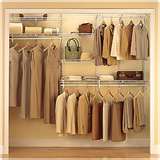
Organizing Your Closets

The change in seasons is a great time to organize your closets. The stores are filled with new styles that you want now but I’d like to encourage you to clean out your closet first. You’ll need a couple of large bags, one for donations, one for trash.


Let’s begin:

Start at one end or the other but move methodically through the closet so as not to miss anything.
You can break this up into sections (maybe work one hour at a time) or tackle the whole closet at once (possibly 2-4 hours depending on the size and amount of clothing)
Use your bed as a sorting area. Create 3 piles: Keep, donate, undecided.
Sort the section by section putting the clothes in these 3 piles. Once everything is out, try on the undecideds.

Keep this in mind when deciding what to keep or donate:

Keep only what fits now.
Keep only what you wear now. (that means in this past year)
Keep only what makes you feel Great.
Keep what others have complimented you on.

Do NOT keep

Extra sizes for “just in case”
Maternity clothes that are years old
Clothes that were specific to a job that you no longer wear.
Anything that needs repair especially if it’s been in need of repair for more than a year. If you really liked it, you would have taken care of that by now.
Anything that you have not worn in 2 years.
Anything that is not comfortable, especially shoes.

You may keep that one good outfit that you need on special occasions but that you may only wear once or twice a year. But it should fit, be in good wearable condition, and be flattering on you.

Now bag up all those items that are damaged and not worthy to donate. Take that to the trash.
Bag up all those items to donate. I’ll give you some suggestions on places to donate at the end of the article.

Put your clothes away in an orderly fashion. Suggestions would be to group by type of clothing, such as tops, pants, skirt, dresses, jackets, casual clothes, work attire, etc. You can further group by color or sleeve length on tops, for example hang your sleeveless, tops in front of the short sleeve, followed by long sleeves.

Keep only what fits in your space and what you can find easily. If your clothes are so packed that you have trouble wrestling the hanger off the pole, then you have too much in your closet. And you probably aren’t seeing everything, therefore, you’re not wearing everything. According to the National Association of Professional Organizers (www.napo.net) we wear 20% of our clothes 80% of the time.

Now make a list of items you need to make complete outfits. If you find yourself often saying, “I don’t have anything to wear.” It may be because you only have a hodge-podge of items, nothing that really goes together. Or possibly you’re not shopping wisely by buying items that are a great price but not a great deal. Or are you a fan of retail therapy? Buying while in a bad mood usually leads to bad choices. A good idea is to get to know the sales staff at your favorite stores. They are there to help you find clothes that fit and flatter your shape and style.

Okay now for the suggested donation centers in SCV:

The Assistance League of Santa Clarita
24364 Main Street
Newhall, CA 91321
661.255.1991
www.assistanceleague-alsc.org

Single Mother’s Outreach
24271 Main St.
Santa Clarita, CA 91321
661.288.0117
www.singlemothersoutreach.org

Domestic Violence Shelter
661.259.4357
www.dvcsantaclarita.com

Goodwill
24840 Pico Canyon Road
Stevenson Ranch, CA 91381
661.705.1040
www.goodwillsocal.org

Goodwill
26883 Bouquet Canyon Rd.
Santa Clarita, CA 91350
661.297.0303
www.goodwillsocal.org

Wednesday, October 13, 2010

Tuesday, October 5, 2010

"Lessons in Letting Go" by Corinne Grant

I follow another Professional Organizer's blog, Lissanne Oliver of Sorted! organizing & decluttering. Lissanne interviews Corinne Grant about her new book "Lessons in Letting Go - Confessions of a Hoarder" I haven't read the book yet but I will certainly put it on my to-read list. Here's some bits from the interview that intrigued me the most:

Lissanne: I thoroughly enjoyed this book: an easy and entertaining read. Very early on, I got a sense of how personal this story was and how brave you were to share it. I really bonded with you over this book. I think many readers will feel the same, and they will definitely identify with your story: I don’t know of any other book like it on the market. Do you feel vulnerable having it all out in the open?

Corinne: I don’t feel vulnerable, strangely enough. I think it’s a combination of having done so much stage work, where I’ve talked about myself, that the book feels like an extension of that, and also, just the fact that I’ve written and re-written so many drafts of the book, that at some stage, it just stopped feeling so deeply personal. I don’t believe in doing things by halves, and the story couldn’t have been told properly unless I was honest, and so, that was simply what had to be done.

You say “In the evenings I would waste my time rearranging and re-stacking piles of god-knows-what, trying to find the magical configuration that would enable me to feel like I was in control. The fear of doing something I might later regret over-ruled any desire to throw it out. If I threw out an old placemat, I might all of a sudden find myself completely unmoored from my past. If I threw out a cardigan my mother had given me for my twenty-third birthday, I might destroy the family bond that held us to each other. We don’t call our possessions ‘belongings’ for nothing and without Thomas beside me it felt like my belongings were the only things holding me together.” You spent a lot of time and energy trying to organise your stuff. How do you feel about that now? Do you have guilt about it?

That’s part of the illness I think of being a hoarder…I think it’s a very Western illness. We do place far more importance on objects – we almost imbue them with human qualities. I had an Indian taxi driver once and he was asking me about the book and I was explaining it and he was saying I just don’t understand what you’re talking about, I Just…. And I tried a few times and he said I seriously don’t understand. And I thought, you know what, you’re not going to! We are completely different people, culturally, to you in that respect just be thankful you’re not one of us!

I guess the point I try to make all the way through the book too is that you’re not going to learn to let go of the stuff until you figure out why you’re hanging on to it in the first place. And you really need to get to that the stuff is a symptom of the fact that you’re not dealing with shit in your life. In the book, as I’m shifting things around, I’m doing that instead of facing up to the fact that I’ve just broken up Thomas… Why did I break up with Thomas? Why did I leave him? I should have been focusing on that not making sure that I labeled a box of 20 year old video tapes. Hoarding’s a very good way of avoiding your life and yet, sitting there in the back of every hoarder’s brain is the thought that there’s something, that you’re just not quite on top of things, or there’s something that you’re missing.

And I think that understanding underpins your success, because people who don’t get that it’s not about the physical stuff, they’re never going to get on top of things.

It’s about a lack of identity I think too. If you’ve got a strong sense of self, you don’t need to be relying on other objects to do that for you. That’s what I figured out for myself, anyway.

That once I started figuring out who I was, then the stuff wasn’t important anymore. I could throw something out and not feel unmoored from my past.

Corinne really did some soul searching and found out some very important things about why she was holding onto the stuff in her life. If you think Corinne's story may help you Let Go of some of your stuff, click here.

Wednesday, September 29, 2010

Are you a Space Optimist?

So a couple of weeks ago I talked about being a Time Optimist and I'd like to stay with that theme and talk this week about being a Space Optimist. Are you nodding your head already?

Do you save things for the bigger home you'll live in some day? Thinking your living arrangement is only temporary?

Or are you saving things for someone else that may need them in the future? Are you saving the old bed and sofa for your daughter when she moves out on her own?

Do you hesitate to rid your home of items that you no longer are using because "maybe I'll need that some day."?

Keeping things that you inherited from relatives but the items aren't really your style?

Sound familiar? Then maybe you're a Space Optimist - keeping more stuff than you have room for in the home you are living in right now. You've probably heard the expression "living in the moment" or "live in the now". Instead of trying to decorate for a home that doesn't even exist today, try filling your life with the most important things for you right now. I use this often, I like it, it brings me joy. If you can say that about the things surrounding you, then you're on the right track.

Saving for a rainy day has it's advantages when it comes to finances or health insurance, but I'm talking about STUFF. It could become very overwhelming to save for every situation that you may encounter. Or saving things for years in the future, like that big home you dream of living in but meanwhile you've been in a small apartment for 15 years and don't see that changing any time soon. Or saving those pieces of furniture for your daughter when she moves out and she's only 10.

And I'll try not to go on a rant about "personal storage units". A personal storage unit should be used on a temporary basis ONLY!! Like when re-modeling your home and you need to remove furniture to allow for the construction. Or you're traveling for an extended period of time but are not keeping your current home. So often the stuff that goes into the storage unit is forgotten the moment it's locked. Think about the cost of saving the items versus the price to repurchase when and if you ever really need it.

Envision your life as you want it right now. Keep what works for you right now. Keep the truly useful and important objects. Keep the things that bring you joy. And please don't hang onto anything under obligation or guilt. Those negative emotions are some of the worst types of clutter. Out it goes!

Tuesday, September 7, 2010

Are you a Time Optimist?

I heard a great expression the other day in regards to someone who is always running late. She was referred to as a "Time Optimist". What a positive spin on something that is usually thought of as a negative?

As an efficiency expert, time is usually quite a challenge for most of my clients. The two key components to being unorganized is usually not making the time or putting off the decisions. Think about that stack of clutter on your desk or kitchen counter. Why is it there? Possibly you thought you would get to it in your free time. Or you couldn't decide what to do with some of the stuff, so you left it there "just for now". Which turned into a few weeks or months, again because you didn't make the time to deal with the stuff.

This can actually be quite an ah-ha! moment, as Oprah says. So many people throw their arms up in frustration as they exclaim, "I'm disorganized. I just don't know how to be organized." But what if it all came down to time?

What if you could be organized if you just put in the time? Now I know I'm over-simplifying things to make my point, but stick with me. What if you scheduled the time on a regular basis (that means daily or weekly) to do those tasks that you've been avoiding? Put the task on your to-do list, put it on your schedule and honor the commitment.

The mind set of all or nothing is getting in your way. Just take baby steps towards getting organized. Really 10-15 minutes a day can make a difference very soon. Conquering an entire cluttered room all at once is paralyzing. But spending a few minutes a day taking bite size pieces out of the clutter can be so much more manageable.

Take the first step towards organization: Take the top 5 pieces of paper in a pile of clutter and deal with those TODAY! File them, shred them, or take the necessary action to complete that task, such as make a call, mail it, or pay a bill. Don't be anxious over the bigger pile remaining on your desk. Focus on your accomplishment!! That will feed your motivation to continue each day. You can do it!

Wednesday, August 18, 2010

Email Control

As I was enjoying lunch with friends today, one admitted to saving lots of emails, just in case she may want them later. My first reaction was to reach for my phone to schedule an organizing session with her. This inspired me for today's blog.

So let me give you some tips on managing your emails:

1. Schedule specific time each day for emails rather than reading them the second they pop into your mailbox. This is where many of us waste huge amounts of time each day. If you don't take the appropriate time to read and answer your emails, you will waste time reading a message once, twice, three times, even more before you act on it. Just read it once, reply, do whatever action is needed and file or delete the email. Complete the task and then move on.

2. Create folders for various topics or people and file only the emails that you will truly refer back to again. Keeping all of your emails in one mailbox, will again cause you to waste time searching for it amongst the thousands.

3. If you need to take more time to find an answer for someone's request in an email, then quickly reply to them that you are working on this and when you plan to have their answer. Then flag the email, so that you remember to follow through. And put it on your calendar so that you make time to complete the task

4. Delete! Delete! Delete!
Delete emails that you will no longer need. Clutter comes in lots of forms - paper, digital, stuff - and none of it is good for you.

5. If you receive emails that you no longer want, then simply unsubscribe. One or two clicks is all it usually takes.

I hope this helps you. Please let me know how you control your emails.

Sunday, August 8, 2010

Organizing Myths

Have you ever heard yourself say, "I'll get to these papers when I have some free time." Seriously?

How much free time do you have in a day? Maybe you have a few minutes a day totaling maybe an hour or two a week. Most of you probably have even less spare time.

So, in that free time you would like to...File? I'm guessing that was not the first thing that came to mind. No, sorting and filing papers is not usually thought of as America's number one past time.

So this brings me to a very big misconception that many people have about organizing: They'll get to it in their free time. In order to be organized, you'll want to make time, and yes that means scheduling it. Schedule organizing daily or at the minimum once a week. Work it into your daily routine starting Today!

Disorganization's best friend is procrastination.

So now you're asking what do I do with all these papers?

1. Take a pile of papers and sort them into these categories:
shred (most of the papers will be in this category)
file (only if you will truly refer to it in the future)
action (needs some type of action such as reading, phone call, fill-out and mail, payment, etc)
relocate (belongs elsewhere in the home or office)

2. Each day for the rest of this week, spend a few minutes accomplishing these tasks. Tuesday do the shredding, Wednesday do the filing, Thursday complete the necessary actions, and Friday relocate any papers that belong elsewhere.

3. Now as papers come into your home or office try practicing the rule of handling it only once. Put it where it belongs now. And if it needs action, put a post-it note on it to remind you what is needed and set it in a specific inbox or basket for you to do.

Try this for a couple of weeks and let me know how's it going.